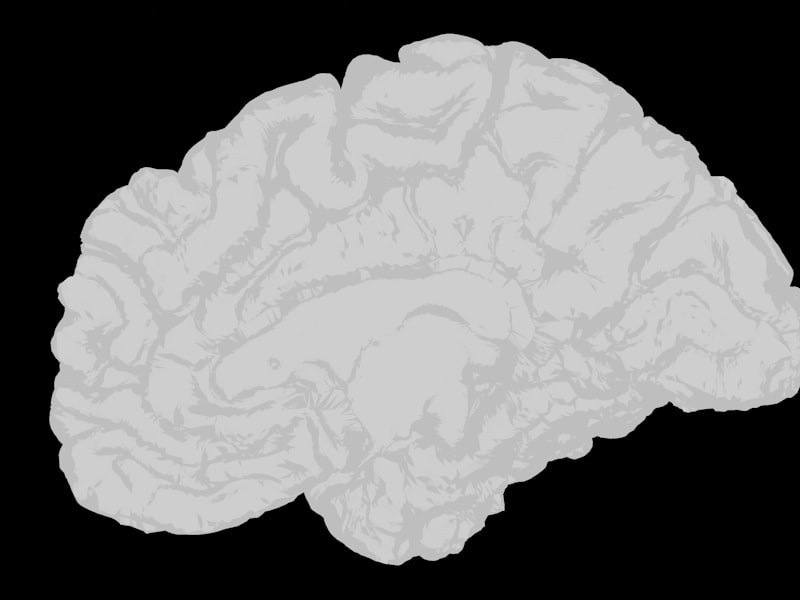
Deep Work and Sleep: The Cognitive Performance Stack You're Ignoring

Deep Work and Sleep: The Cognitive Performance Stack You’re Ignoring
The Uncomfortable Truth About Your Focus Problem
Most productivity advice treats focus as a willpower problem. If you can’t concentrate, the prescription is more discipline: wake earlier, work harder, resist distraction more aggressively.
That advice misses the single most powerful lever for cognitive performance: sleep.
Decades of neuroscience research make it unambiguous — sleep isn’t passive downtime between work sessions. It’s the biological process that consolidates memory, clears metabolic waste from the brain, restores prefrontal cortex function, and literally rebuilds the neural infrastructure that deep work requires.
You can’t willpower your way through chronic sleep debt. No system, ritual, or productivity hack compensates for insufficient or poor-quality sleep. If you’re serious about building a sustainable deep work habit, you must be serious about sleep first.
“Sleep is the single most effective thing we can do to reset our brain and body health each day.” — Matthew Walker, Why We Sleep
TL;DR: Sleep isn’t recovery from work — it’s the biological foundation that makes focused, high-quality work possible. A landmark 2003 study found that 6 hours of sleep per night for 14 days produces cognitive deficits equivalent to two full nights of total sleep deprivation. No focus system, morning routine, or productivity hack compensates for that deficit.
What Happens to Deep Work Capacity During Sleep Deprivation
A landmark 2003 study in Sleep by Van Dongen and colleagues tracked 48 healthy adults sleeping 4, 6, or 8 hours nightly for 14 consecutive days. Those restricted to 6 hours developed cognitive deficits equivalent to two full nights of total sleep deprivation — yet “subjects were largely unaware of these increasing cognitive deficits” (Van Dongen et al., Sleep, 2003). This subjective blindspot is what makes sleep debt so dangerous for knowledge workers: you feel functional while your performance has cratered.
The Prefrontal Cortex Takes the First Hit
The prefrontal cortex — the brain region most responsible for the executive functions that deep work demands — is exquisitely sensitive to sleep deprivation. After just one night of insufficient sleep (fewer than 7 hours for most adults), measurable deficits appear in:
- Working memory capacity — the mental workspace where you hold and manipulate complex information
- Sustained attention — the ability to remain focused on a single task for extended periods
- Cognitive flexibility — the capacity to shift approaches when a strategy isn’t working
- Inhibitory control — the ability to suppress irrelevant thoughts and impulses
These are precisely the capacities that distinguish deep work from shallow work. Sleep deprivation doesn’t reduce your ability to check email or attend meetings — it specifically and severely degrades the high-order cognitive functions that make depth possible.
Citation capsule: Van Dongen et al. (2003) demonstrated in a controlled trial of 48 adults that chronic sleep restriction to 6 hours per night for 14 days produces cumulative cognitive deficits equivalent to two nights of total sleep deprivation. Critically, subjects rated themselves only mildly sleepy — meaning self-report dramatically underestimates the actual impairment. (Van Dongen et al., Sleep, 2003)
The Subjective Blindspot
Perhaps most dangerously, sleep-deprived individuals consistently underestimate their own impairment. After two weeks at 6 hours per night, subjects showed performance equivalent to having been awake for 48 hours straight — yet felt only mildly sleepy (Van Dongen et al., Sleep, 2003).
This is the hidden cost of chronic mild sleep restriction. You may believe you’re doing deep work when you’re actually producing shallow-work-quality output at depth-consuming effort levels. The hours feel focused. The output tells a different story.
Memory Consolidation and Skill Acquisition
Deep work is fundamentally about building expertise — mastering complex information, developing sophisticated judgment, creating novel insights. All of these depend on memory consolidation, which occurs almost exclusively during sleep.
During slow-wave sleep (SWS), the hippocampus replays newly acquired information and transfers it to long-term cortical storage. During REM sleep, the brain makes associative connections between disparate pieces of information. Research by Rasch and Born confirms that hippocampal firing patterns are replayed during sleep at 10–20 times their waking speed — the neurological substrate of creative insight and pattern recognition (Rasch & Born, Physiological Reviews, 2013).
Cutting sleep short doesn’t just leave you tired. It literally prevents consolidation of what you worked on the day before.
The Sleep Architecture of a Deep Worker
Understanding basic sleep architecture helps optimize sleep for cognitive performance. A complete night isn’t just a duration — it’s a sequence. And each phase does a different job.
Citation capsule: Rasch and Born’s 2013 review established that slow-wave sleep (SWS) primarily consolidates declarative memory — facts and concepts — while REM sleep supports procedural skill and emotional memory. The two stages are non-interchangeable: losing early-night SWS impairs factual retention; losing late-night REM impairs creative and associative thinking. (Rasch & Born, Physiological Reviews, 2013)
Sleep Cycles
Sleep occurs in roughly 90-minute cycles, each containing proportions of different sleep stages:
- N1 (Light sleep): Transition into sleep, 5–10 minutes per cycle
- N2 (Consolidated sleep): The dominant stage, essential for motor learning and procedural memory
- N3 (Slow-wave/Deep sleep): Dominant in early cycles, critical for declarative memory and physical restoration
- REM sleep: Dominant in later cycles, critical for emotional memory, creativity, and associative learning
The practical implication: both early-night deep sleep and late-night REM sleep serve distinct, non-interchangeable cognitive functions. Cutting sleep short (losing REM) impairs creativity and insight. Going to bed too late (delaying deep sleep) impairs factual memory and physical recovery. A complete sleep window captures both — and that’s why a consistent, adequate sleep schedule matters more than any single night of “catching up.”
What does this mean for your deep work morning routine? Everything. The sharpness you feel at 8am is directly determined by what happened between 11pm and 7am.
The Glymphatic System: Your Brain’s Night Crew
One of neuroscience’s most significant recent discoveries is the glymphatic system — a waste clearance network in the brain that operates primarily during sleep. During deep sleep, glymphatic flow increases dramatically, flushing metabolic waste products (including amyloid-beta plaques associated with Alzheimer’s disease) from brain tissue.
Think of glymphatic clearance as the maintenance work that happens when the cognitive machinery is powered down. Chronic sleep restriction means the maintenance never fully completes, and cumulative metabolic waste impairs neural function over time.
For deep workers: this isn’t an abstract long-term concern. Even short-term glymphatic clearance deficits contribute to the cognitive fog and reduced focus that impair daily performance.
Building a Sleep Protocol for Cognitive Performance
Research is clear about what works. The challenge isn’t knowing — it’s implementing these changes in a life where late nights, variable schedules, and screens after 10pm have become the default.
Establish a Consistent Sleep-Wake Anchor
Your circadian rhythm — the biological clock that regulates sleep, alertness, and a host of physiological processes — is anchored by consistent wake time above all else.
The single most effective intervention: choose a fixed wake time and maintain it seven days a week, including weekends.
Consistent wake time stabilizes your circadian rhythm, which in turn stabilizes sleep onset, sleep architecture, and the predictable cognitive performance windows that effective time-blocking for deep work requires.
Variable wake times — sleeping in on weekends, staying up late on weekdays — create what sleep researchers call “social jetlag,” a form of chronic circadian disruption that measurably degrades cognitive performance even when total sleep hours are adequate.
Protect Your Sleep Duration
Research is clear on population-level requirements: approximately 95% of adults require 7–9 hours of sleep per night for optimal cognitive performance. The percentage of people who genuinely function optimally on 6 or fewer hours is very small — researchers estimate 1–3%.
The CDC reports that roughly 35–37% of U.S. adults consistently fall short of the recommended 7 hours (CDC Behavioral Risk Factor Surveillance System, 2022). That’s a majority of the workforce operating below their cognitive potential while assuming they’re fine.
If you’re consistently sleeping fewer than 7 hours, you’re almost certainly operating below your cognitive ceiling — regardless of what your subjective experience tells you.
Engineer the Sleep Environment
The conditions of your sleep environment directly affect sleep architecture and depth:
Temperature: Core body temperature must drop 1–3°F to initiate sleep. Cool environments (65–68°F / 18–20°C) dramatically improve sleep onset and quality.
Darkness: Even small amounts of light — a phone screen across the room, light bleeding under a door — suppress melatonin production and reduce REM sleep. Blackout curtains or a sleep mask are evidence-based investments for cognitive performers.
Quiet: Sleep disruptions don’t require full awakening to degrade cognitive performance. Brief micro-arousals from noise fragment sleep architecture even when you don’t remember waking. Earplugs or white noise address this in most environments.
The Pre-Sleep Wind-Down Protocol
Transitioning from waking cognitive engagement to sleep requires a deliberate wind-down that allows the nervous system to shift from sympathetic (activating) to parasympathetic (restorative) dominance.
A research-informed wind-down protocol (begin 60–90 minutes before target sleep time):
- Reduce light exposure — dim all lights, switch screens to night mode or eliminate them entirely
- Lower ambient temperature — cool the bedroom and consider a warm shower or bath (the post-bath temperature drop accelerates sleep onset)
- Avoid stimulating content — work emails, news, and emotionally activating content extend arousal; replace with light reading, gentle conversation, or relaxation practices
- Write a completion list — briefly document tomorrow’s key tasks and any open loops from today; this “captures” cognitive preoccupation and reduces sleep-disrupting rumination
This last step is directly connected to the deep work shutdown ritual — the same psychological closure that ends your work day properly also sets up your sleep.
The Deep Work–Sleep Connection: Strategic Use of Morning Clarity
One underappreciated benefit of protecting your sleep is access to peak morning cognitive clarity. Most adults experience their highest cognitive performance 1–3 hours after waking — a window during which working memory, attention, and cognitive processing speed are at daily peaks.
Deep workers who protect their sleep consistently report that morning focus sessions are qualitatively different from afternoon sessions — sharper, more generative, more productive per unit of time. This peak morning window only exists when you’re well-rested. Sleep deprivation flattens the cognitive performance curve and eliminates the morning advantage entirely.
Common Sleep Disruptors for Knowledge Workers
A useful reframe: most productivity problems aren’t strategy problems. They’re sleep problems wearing strategy costumes. The inability to focus during a 10am session is often traceable to what happened at 11pm the night before.
Caffeine Half-Life
Caffeine has a half-life of approximately 5–7 hours in most adults. A 2pm coffee contains roughly half its caffeine at 8pm and a quarter at midnight. This sub-threshold caffeine load impairs sleep architecture — particularly deep sleep — even when it doesn’t prevent sleep onset.
Consider establishing a consistent caffeine cutoff. Most sleep researchers recommend no later than 1pm for optimal sleep, 2pm as a reasonable compromise.
Late-Night Screen Use
Blue-wavelength light from screens suppresses melatonin production via photoreceptors in the retina called ipRGCs. The suppression is dose-dependent and timing-dependent: bright blue-light exposure in the 1–2 hours before bed delays sleep onset and reduces early-night deep sleep.
Practically: power down bright screens 60–90 minutes before sleep, or use red-wavelength lighting (candles, red-spectrum bulbs, or f.lux/Night Shift software) for evening screen use. This is one of the cheapest, highest-return adjustments available for cognitive recovery and deep work performance.
Work-Related Cognitive Arousal
The same analytical and creative capacities that deep work requires are precisely the ones that prevent sleep onset when activated too close to bedtime. The mind that was productively generating solutions at 9pm will still be generating solutions at 11pm unless you explicitly disengage it.
The shutdown ritual — a clear psychological boundary marking work’s end — isn’t merely a work habit. It’s a sleep hygiene intervention that allows cortisol and cognitive arousal to subside before your target sleep time. We’ve found this single change produces noticeable improvements in sleep onset for most knowledge workers within the first week.
Tracking and Iterating Your Sleep
Objective sleep tracking (via wearables like Oura Ring, Whoop, or even basic sleep cycle apps) provides data that subjective experience can’t: sleep efficiency, time in each stage, wake frequency, and trends over time.
Track your deep work quality as you track your sleep quality and look for correlations. From what we’ve seen, most people discover:
- Sleep below 6.5 hours produces measurably worse deep work sessions regardless of motivation
- High-quality 8-hour sleep enables focus quality that’s difficult to achieve at any duration below 7 hours
- Consistency of sleep timing predicts next-day cognitive performance almost as strongly as total duration
Use these correlations to build conviction about sleep investment. The data makes the case for your nervous system that good intentions alone rarely do. This connects directly to the science behind cognitive performance and why the neurological case for deep work always starts with sleep.
FAQ: Deep Work and Sleep
Q: How many hours of sleep do I actually need for deep work? Most adults need 7–9 hours for optimal cognitive performance. Research from the American Academy of Sleep Medicine suggests the target is “somewhere between 7 and 7.5 hours” for healthy adults. The 1–3% who genuinely thrive on 6 hours is far smaller than the population that believes they’re in that group.
Q: Can I catch up on sleep debt over the weekend? Partially. You can recover some of the performance deficit from acute sleep restriction, but the research on chronic sleep debt suggests you can’t fully reverse two weeks of 6-hour nights with a single long weekend. A consistent sleep schedule is always more effective than recovery sleep.
Q: Does napping help with deep work performance? Yes, strategically. A 20-minute nap (before you enter deep sleep, to avoid grogginess) taken around midday can restore alertness and working memory for an afternoon session. Naps longer than 30 minutes tend to cause sleep inertia — a grogginess that takes 20–30 minutes to clear.
Q: What’s the relationship between sleep and the flow state? Sleep is a prerequisite for reliable flow. Flow requires working memory, sustained attention, and emotional stability — all of which are severely degraded by sleep deprivation. We’ve found it’s nearly impossible to enter genuine flow on less than 7 hours of sleep.
Q: Should I adjust my deep work schedule around my sleep chronotype? Absolutely. A night owl forcing a 5am deep work session will underperform compared to working at their natural peak (often 10am–12pm). Aligning your deep work blocks with your chronotype’s peak window — which is only accessible when you’re sleeping adequately — produces better outcomes than any artificial morning routine.
Erik McCord writes about deep work, cognitive performance, and the science of focused work at DeepWork.in.