Deep Work on the Move: Maintaining Focus While Traveling and Working Remotely
Deep Work on the Move: Maintaining Focus While Traveling and Working Remotely
The Travel Problem for Deep Workers
Travel is one of the most reliable disruptors of deep work practice. Even the most disciplined practitioners find that their focus routines collapse when they leave their established environment.
The reasons are systemic, not personal:
- Environmental triggers are absent — the familiar desk, light, sounds, and space that trigger focus don’t exist in a hotel room or airport lounge
- Schedule fragmentation — travel days, time zone changes, and unfamiliar time constraints break the consistent timing that makes focus habitual
- Cognitive overhead increases — navigation, unfamiliar logistics, and new environments consume attentional resources that would otherwise support deep work
- Recovery from travel stress — disrupted sleep, physical fatigue, and social intensity of business travel deplete the cognitive resources deep work requires
Understanding these mechanisms makes it clear that maintaining deep work during travel requires deliberate design—not just stronger willpower applied to the same approach.
Designing Your Travel Deep Work System
The Portable Environment Protocol
The most powerful countermeasure to environmental disruption is a portable trigger kit—a consistent set of sensory conditions you recreate wherever you are that signal “deep work time” to your brain.
The portable trigger kit typically includes:
- Headphones with specific audio — the same focus playlist, ambient sound (brown noise, rain, coffee shop sounds), or silence that you use at your regular workspace
- A consistent physical setup — a specific keyboard, a mouse or trackpad you prefer, your own monitor if sessions will be extended
- A ritual object — something small (a specific mug, a physical notebook, a small object on your desk) that you use consistently for deep work and that travels with you
- Lighting adjustment — a small LED light or specific lamp setting, if your regular work uses particular lighting
The goal is recreating enough of the sensory environment that your brain receives the same “deep work” cues it receives at home, even in an unfamiliar physical space.
The Session Anchor: Time Before Logistics
On travel days, the morning before logistics begin is the most reliably available deep work window.
A 7am hotel deep work session—before the 9am conference sessions, before the networking breakfast, before the flight connection—protects a focused block from the day’s inevitable fragmentation.
This means waking slightly earlier than strictly necessary on travel days (which are often already early-wake days), and treating the first hour as focus time before switching to logistics mode.
The practice also helps with jet lag: anchoring a morning focused activity to your home timezone (or adapting to the new timezone through a consistent morning ritual) helps reset circadian rhythms faster.
Pre-Trip Session Loading
Before any travel that will disrupt your practice for 2+ days, do a more intensive deep work session to front-load progress. This serves two purposes:
- Advances your key projects before the disruption
- Creates “saves” (recorded state of where you are in each project) that make re-engagement easier when you return
A pre-trip session also includes a context capture: write down, for each active project, exactly where you are and what the next step is. When you return from travel, this note eliminates the 30-45 minutes of re-orientation that typically precedes productive work after a break.
Airports, Flights, and Transit
The Airport as Deep Work Space
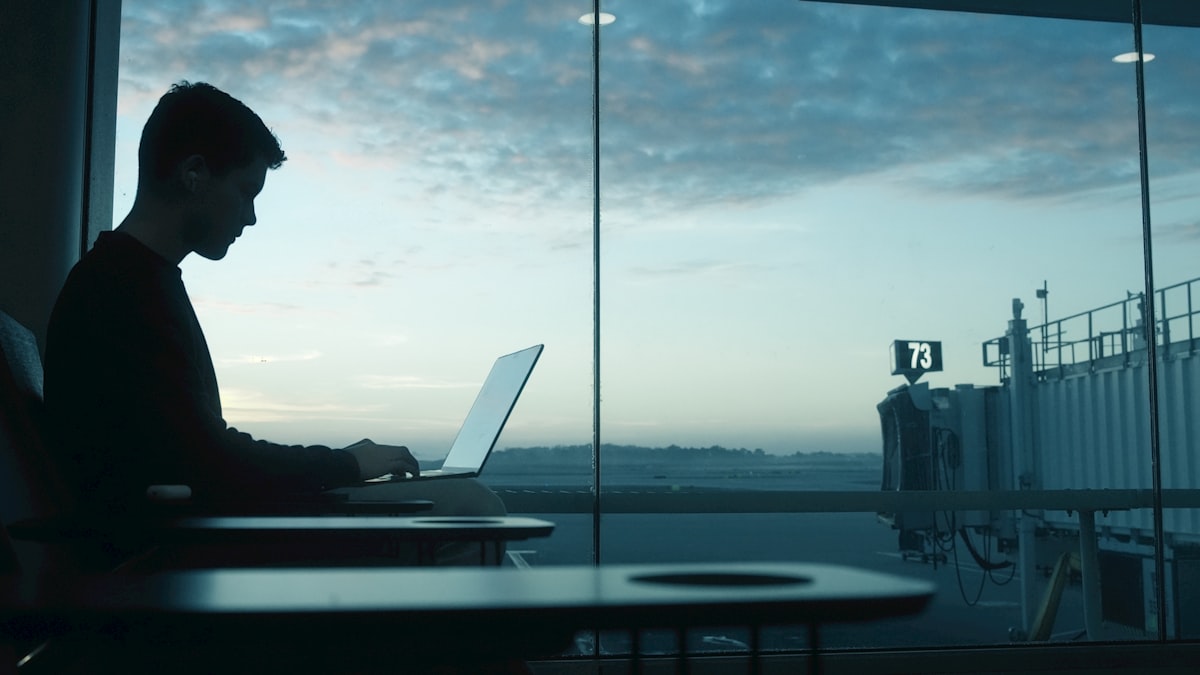
Airports are loud, distracting, and social—the opposite of a focus environment. But with the right preparation, they offer something valuable: enforced waiting time that can become focused work time.
What works in airports:
- Noise-canceling headphones — non-negotiable for airport focus; they don’t just reduce volume, they signal to others that you’re unavailable
- Offline work — pre-download everything you need (documents, offline capabilities in apps, research articles) so you’re not dependent on unreliable WiFi
- Pre-defined session goal — know exactly what you’re working on before you sit down; don’t waste airport time on deciding what to do
What doesn’t work:
- First attempts at creative work you’ve never started before (too much cognitive overhead to initialize a new project in a noisy environment)
- Work that requires internet connection and fast response times
- Complex multi-system work (when you’re locked out of half your tools by connectivity issues)
Airport sessions are best for: advancing existing work you’re already fluent in, deep reading, writing that’s in progress, review and editing, or processing materials you’ve captured for later synthesis.
Flights as Forced Focus
The airplane is, counterintuitively, one of the best environments for deep work available to modern professionals. It offers:
- Enforced physical stillness (you’re not going anywhere)
- Absent notifications (flight mode eliminates all communication interruptions)
- No one expecting anything from you for 2-10 hours
- A defined time window that creates mild temporal pressure
Many serious deep workers describe flights as some of their most productive time—not despite the constraints, but because of them.
Maximizing flight deep work:
- Have a specific, high-priority project pre-loaded and ready to open
- Bring everything you need offline
- Choose a window seat (reducing the social obligation to move for others reduces micro-interruptions)
- Decline headphones, in-flight entertainment, and food service unless the flight is very long (social interactions disrupt flow each time)
A 4-hour flight with full focus is worth more cognitively than an entire day of fragmented work.
Location Independence and the Digital Nomad Challenge
For people who work remotely from different locations—digital nomads, location-independent employees, and remote contractors—the challenge isn’t occasional travel but the permanent absence of a consistent physical workspace.
The Consistent Location Rotation
Rather than working from wherever is convenient, designate 2-3 locations in each city you frequent and use them consistently. The consistency builds the environmental association that supports focus.
In any new city:
- Identify your primary deep work cafe or coworking space within the first day
- Return to it consistently for deep work sessions
- Use it exclusively for deep work (don’t use your primary deep work location for calls, casual browsing, or social work)
This recreates some of the environmental trigger consistency of a home office even in changing locations.
The Coworking Space Investment
Dedicated coworking spaces—despite their cost relative to cafes—offer advantages that matter for serious deep workers:
- Quiet rooms or phone booths for the deepest sessions
- Consistent, fast internet
- A working culture that normalizes sustained focus (others around you are working seriously)
- Separation from the leisure associations of cafes and hotels
For digital nomads, a monthly coworking membership in each base city is typically a worthwhile investment in deep work productivity.
Managing Time Zone Disruption
For knowledge workers who collaborate across time zones, the deep work challenge is carving out focus time from a schedule that already bends to accommodate global teammates.
The protected window principle: No matter what time zone you’re in, identify 2-3 hours where your working day doesn’t overlap with your primary collaborators’ working days. These non-overlap hours are your best candidates for protected deep work—no synchronous demands can interrupt them.
For example: a European working with American teammates will have protected morning hours (before American teammates wake up) that are ideal for deep focused work, even if afternoons are consumed by synchronous collaboration.
Maintaining Deep Work on Business Trips
Business trips are the most disruptive travel scenario because they include both the logistical disruption of travel and intensive social and professional obligations.
The Conference Deep Work Strategy
Conferences typically run 8am-6pm with evening social events. The deep work window is the early morning before the conference begins.
The 6am-8am conference session: Schedule a 90-minute deep work session every morning of a multi-day conference. Use it to advance your most important current project—not conference-related work, which will get attention throughout the day. This creates a daily anchor of meaningful work that makes the conference feel less like a total loss to your regular practice.
The Evening Wind-Down Constraint
Business travel evenings are often socially intensive—dinners, drinks, networking. While valuable, they compete with the sleep and recovery that cognitive performance requires.
Setting a private limit—leaving events by a specific time (even if others are staying later), regardless of social pressure—protects the sleep quality that makes the morning deep work session possible.
Returning from Travel: The Re-Entry Protocol
The day after returning from travel is typically characterized by:
- Catch-up mode (email accumulation, backlogged tasks)
- Recovery deficit (sleep disruption, travel fatigue)
- Context loss (disconnected from current projects)
The temptation is to spend the entire first day back on catch-up—inbox zero, meeting responses, and logistics. This produces a day of shallow work at exactly the moment your deep work projects are most at risk of losing momentum.
The re-entry protocol:
- First session of the first morning back: deep work only — use the context capture from your pre-trip session to re-engage with your most important project immediately
- Batch the catch-up — schedule all email, messages, and administrative catch-up into the afternoon of the re-entry day
- Accept reduced depth — your first day back may not produce your best work; this is normal and temporary
The key is ensuring that your deep work practice has continuity across the travel interruption, even if with reduced intensity.
Erik McCord writes about location-flexible work, focused productivity, and the practice of deep work at DeepWork.in.